Why Construction Logistics Animations Win Over Owners Before the First Shovel Moves

Owners and selection committees rarely struggle to understand what a contractor will build. The harder question is how the contractor will build it on a tight site, with live traffic, neighbors, and an occupied facility next door. A construction logistics animation answers that question visually, in the time it takes to watch a two minute clip.
What a Logistics Animation Actually Shows
A logistics animation is a sequenced 3D model of site activity. It places crane locations, laydown yards, haul routes, hoists, temporary fencing, and pedestrian detours into the real site context, then moves them through each phase of work. Instead of a static site logistics plan with arrows and callouts, the audience sees the order of operations unfold.
The value is in the sequencing. A reviewer can see that the tower crane goes up before the east access road closes, or that the concrete pour on level three never conflicts with the deliveries scheduled for the same morning.
Where It Helps Most
Healthcare expansions, higher education buildings on landlocked campuses, and downtown office projects all share the same problem: very little room to work. In these settings, logistics is often the deciding factor in who wins the job. A team that can show how patient access stays open, how students move around a closed quad, or how a lane closure stays under permit limits has a clear advantage over one that describes it in a paragraph.
Heavy civil and industrial projects benefit for a different reason. Large equipment moves and tight outage windows are easier to rehearse in a model than to explain across a table.
Built From Real Project Data
A useful animation starts with the project team, not the animator. We work from the site plan, the schedule, the logistics narrative, and a conversation with the superintendent. The goal is to show what the team actually intends to do, not a polished version of what looks good on screen.
That means the animation can change as the plan changes. If the superintendent moves the staging area or the schedule shifts a phase, the model is updated to match. An animation that contradicts the interview answers is worse than no animation at all.
Using It Inside the Proposal and the Interview
The most common mistake is treating the animation as a separate deliverable that sits on a thumb drive. It works better when it is built into the pursuit. Short clips can be embedded in the presentation deck, linked from the written proposal through a QR code, and cut into shorter segments that support specific interview answers.
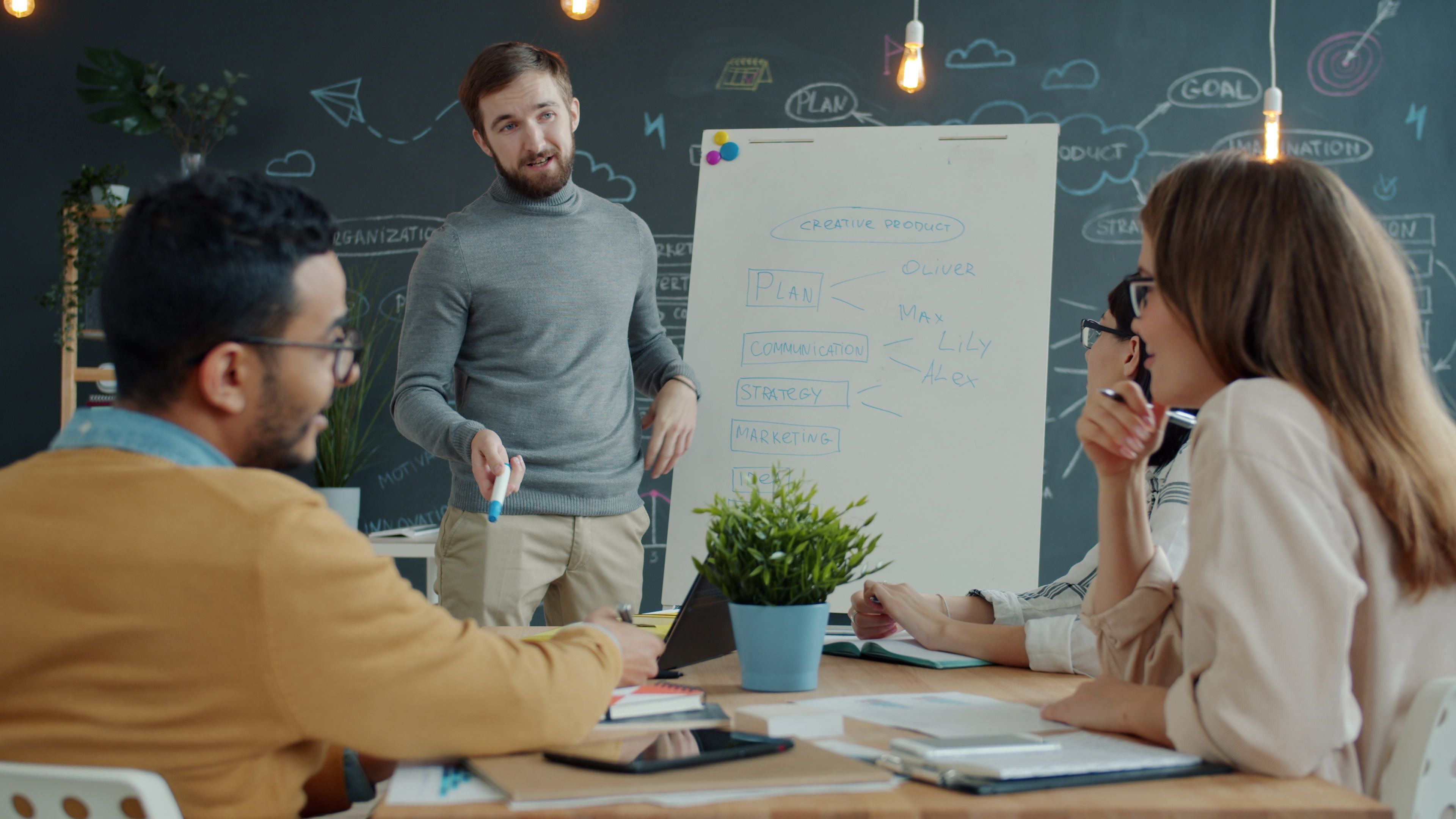
During the interview, the animation gives the project manager and superintendent something concrete to talk over. They stop reading from slides and start walking the committee through the plan, which is where confidence is built.
Carrying It Into Preconstruction and Field Coordination
The value does not end when the award is announced. The same model gives subcontractors a shared view of the site during preconstruction meetings, helps neighbors and campus staff understand what is coming, and supports safety orientations for crews new to the site.
Teams that reuse the model this way tend to see fewer surprises in the field, because the conflicts were discussed while they were still cheap to fix.
What to Ask Before Commissioning One
Ask who will build the model and whether they understand construction sequencing, not only animation. Ask how revisions are handled and how quickly. Ask what formats you will receive, since a clip that only plays on one laptop is of limited use. Finally, decide up front which questions the animation needs to answer, so the final product is focused rather than decorative.
The Bottom Line
A construction logistics animation turns a site plan into a story that evaluators can follow in minutes. It supports the proposal, strengthens the interview, and keeps working after the award. For teams pursuing work on constrained sites, it is one of the most direct ways to show competence instead of claiming it.